Saturday, December 19, 2015

Bjúgnakrækir - Icelandic Yule Lads (December 20th)

In contrast with Skyrgámur‘s habit of eating tons of healthy skyr, Bjúgnakrækir (Sausage Swiper), the Yule Lad arriving on the 20th night of December, prefers his snacks high in cholesterol. Nobody knows exactly what his preference is: rumors say he will ravenously eat all kinds of sausages, without any exception. His appetite can make him reckless sometimes.

Smoked sausages are a brilliant way to preserve meat in a place like Berk (or most of the North Atlantic Islands) where it may snow and hail and rain locusts (or whatever Hiccup dreams up in his snarkfest), but it rarely gets cold enough to freeze food. So smoking, pickling, drying, curing are all ways to keep food stashed through the winter.

Bjúgnakrækir - Icelandic Yule Lads (December 20th)

The rafters are an ideal place to store the lamb meat and fish meat sausages once they are prepared. Then the cook just snags down dinner from the ceiling and dumps it in a pot to boil. Sometimes you have to climb a bit to get dinner. At the Haddock household it´s a good thing there is a tall chieftain and a willing Night Fury to help with this. And a few cleverly designed long hooks for those days when the chief dragon tamer/chef does not want dragon drool on the sausages.

Until December 20, of course. Then Bjúgnakrækir makes his way into the farms and the village, ready to snatch some sausages. It's a good thing he's an acrobat so he can climb WAAAY up into those rafters and reach for the prize. He just, unfortunately, is a leeetle bit afraid of heights. But singing usually helps him deal with the situation, and also keeps the watch dragon fast asleep.

So, if you are planning to make sausage stuffing or simply hot dogs between Dec 20 and Jan 2, keep 'em hidden. This guy's on the prowl!

Bjúgnakrækir - Icelandic Yule Lads (December 20th)

Luckily for this chap, there’s not much need for recklessness in recent times: in Reykjavík you can find near the harbor the famous Bæjarins beztu pylsur (Best hot dog in town in English) stand, described by many satisfied customers as one of the best in the world. I’m pretty sure Bjúgnakrækir knows very well and he visits the stand regularly during his annual excursions.

Icelandic

Níundi var Bjúgnakrækir,
brögðóttur og snar.
Hann hentist upp í rjáfrin
og hnuplaði þar.

Á eldhúsbita sat hann
í sóti og reyk
og át þar hangið bjúga,
sem engan sveik.

English

Ninth was Sausage Snatcher
Artful and quick.
He hied up to the rafters
And snatched a little there.

On a kitchen beam he sat
In smoke and soot
And ate a smoked sausage,
That was very good.

Berglind, Iceland24h.blogspot.com
December 2015

Skyrgámur - Icelandic Yule Lads (December 19th)

This is the day for Skyrgámur, the Skyr Gobbler.

Skyr (or farköst) is a type of cheese, though it more resembles a very thick yogurt. The Greek yogurt that has become so popular lately resembles it, but not exactly. Skyr tastes tangy, thick and rich, yet it actually is low fat.

Like yogurt, you need to use a "starter" culture from a previous batch of skyr. Milk with all of the cream skimmed out is mixed with buttermilk, rennet and a bit of older skyr culture and brought to a boil. It is allowed to cool down slowly so the rennet can "work its magic." A curd and whey has been created. The mixture is strained through something like cheese cloth until all the whey has dripped out. (The whey is saved as a preservative for meats). The remaining "curds" are skyr.

Skyrgámur - Icelandic Yule Lads (December 19th)

Skyrgámur is not the brightest Yule Lad in the litter, and after a full year of doing other things (he is into collecting snow in the winter and dew drops in the summer and his collection keeps getting stolen by someone mysterious), he often forgets exactly how to do his job. Eat it, play with it, throw it at someone, decorate it? His Terrible Terror friend is just as forgetful but still 100% of a prankster. Deadly combination.

They call him stupid, but apart from his lack of temperance Skyrgámur is not that stupid. For those who are wondering, skyr is a low-fat and very high in proteins dairy product, similar to strained yogurt, but much healthier. Thanks to its components, skyr’s nutritional benefits are quite remarkable.

So if you don't want to share any of your cultural experiences with Skyrgámur, hide your yogurt, skyr, buttermilk, filmjölk, kefir and sour cream from sight between Dec 19 and Jan 1.

Icelandic

Skyrgámur, sá áttundi,
var skelfilegt naut.
Hann hlemminn o'n af sánum
með hnefanum braut.

Svo hámaði hann í sig
og yfir matnum gein,
unz stóð hann á blístri
og stundi og hrein.

English

Skyr Gobbler, the eighth one,
Was a terrible bull.
The lid off the skyr tub
With his fist he smashed.

Then he gobbled up
As much as he could,
Till he was close to bursting
And moaned and grunted.

Berglind, Iceland24h.blogspot.com
December 2015

Friday, December 18, 2015

Hurðaskellir - Icelandic Yule Lads (December 18th)

Hurðaskellir (Door Slammer) is a peculiar Yule Lad and much more of a prankster than most of his brothers. He doesn’t care much for food, but he’s got the obsessive addiction of door-slamming. No door is safe when this crazy rascal is around. The louder the noise, the better – and just to be sure, better repeating the trick more than once in a row: Hurðaskellir’s ego is quite troublesome.

We all know people with the annoying tendency of being very noisy when they close doors, but the problem with Hurðaskellir is that he likes to do that at night. I suggest that you don’t forget to lock any single door in your house, especially if you’re living with somebody with severe heart conditions…
Hurðaskellir - Icelandic Yule Lads (December 18th)

What's worse is that Hurðaskellir seems to have a fan club with a lot of children in it, because they just LOVE to slam doors and say they are imitating their favorite hero.

Hurðaskellir is going to harass your doors on 18 December.

Icelandic

Sjöundi var Hurðaskellir,
- sá var nokkuð klúr,
ef fólkið vildi í rökkrinu
fá sér væran dúr.

Hann var ekki sérlega
hnugginn yfir því,
þó harkalega marraði
hjörunum í.

English

Seventh was Door Slammer,
- He was a little brash.
When people in the dark
Wanted to nap.

He was not one bit
Sorry for that,
If loud, creaking noises
Came from the hinges.

Berglind, Iceland24h.blogspot.com
December 2015

Thursday, December 17, 2015

Askasleikir - Icelandic Yule Lads (December 17th)

Askasleikir (Bowl Licker) is the 6th in the Yule Lads gang to visit during the Christmas period. He arrives on the 17th of December. I don’t want to make it sound like I am partial - because in fact I am not - but I think Askasleikir is very sly. At least, more than the majority of his brothers.

In the old times, especially in farmhouses, Icelanders used to eat from lidded bowls sitting on their beds. The lidded bowls prevented the food from getting cold and were usually placed on the floor or under the bed in between bites.
Askasleikir - Icelandic Yule Lads (December 17th)
Askasleikir specialized in hiding under furniture waiting for these moments and refined his art over the years. When something edible is placed on the floor, he stretches his arms and steals it.

I suspect it may be this gentleman’s fault that children are so afraid of monsters hiding under the bed at night.

Icelandic

Sá sjötti, Askasleikir,
var alveg dæmalaus.
-Hann fram undan rúmunum
rak sinn ljóta haus.

Þegar fólkið setti askana
fyrir kött og hund,
hann slunginn var að ná þeim
og sleikja á ýmsa lund.

English

The sixth, Bowl Licker,
Was without a peer.
-From under the beds, he
Pushed his ugly head.

When the bowls were placed
In front of cat and dog,
He cunningly snatched them
And licked till he was full.

Berglind, Iceland24h.blogspot.com
December 2015

Wednesday, December 16, 2015

Pottaskefill - Icelandic Yule Lads (December 16th)

It's Pottaskefill, the pot licker. Most of us, admit it, are not fond of leftovers (spam hash, anybody?). This Yule Lad lives for them! He patiently waits until households are finished with their cooking. Then he sneaks in and demolishes the leftovers in the pot with lightning speed.

His job is easy to do with the normal Viking household, but the Vikings on Berk are quite well grown, and the chances of leftovers are not great.

Pottaskefill - Icelandic Yule Lads (December 16th)

But Pottaskefill has picked up a few tricks over the years to guarantee he gets leftovers. Vikings had a notorious love of seasoning, gaining new tastes as they traveled on trading missions and their raid- oops, I mean, acquiring new possessions without paying for them. A wealthier household might have spices such as cumin, pepper, saffron, ginger, cardamom, cloves, nutmeg, mace, cinnamon, anise-seed, and bay leaves. In fact, Scandinavia is one of the few regions outside of South Asia that uses cardamom as a staple spice.

Anyway, like a Viking trader, Pottaskefill has collected his own formidable armada of seasonings from his visits. He has strung them onto a bandolier like vest that he wears when he visits Berk. And he uses them liberally and inappropriately (lots of salt in the deserts, honey and cinnamon in the meat soup, etc.). And lots and lots and lots of hot peppers.

Top it off with a few extra logs to insure the fire will burn the food, and Pottaskefill has guaranteed leftovers! It's a good thing he has developed a cast iron stomach over the years. Some of the other Yule Lads and Grýla have noticed, actually, that he no longer can eat food if it tastes good.

Icelandic

Sá fimmti, Pottaskefill,
var skrítið kuldastrá.
- Þegar börnin fengu skófir
hann barð dyrnar á.

Þau ruku' upp, til að gá að
hvort gestur væri á ferð.
Þá flýtti 'ann sér að pottinum
og fékk sér góðan verð.

English

The fifth, Pot Licker,
Was a weird cool lad.
As the children received scrapings,
He knocked at the door.

They rushed off to see
If a guest was dropping in.
Then he hurried to the pot,
And had a filling meal.

Berglind, Iceland24h.blogspot.com
December 2015

Tuesday, December 15, 2015

Þvörusleikir - Icelandic Yule Lads (December 15th)

Þvörusleikir, it loosely means "Spoon Licker," but it really means "Pot Scraper Licker."

Modern depictions of this Yule Lad show him as a very skinny guy licking a wooden spoon, but actually the spoon was not a spoon. It was a Viking age (and later) kitchen tool called a "Pot Scraper." This was a very long and skinny kitchen tool with a tip that was more like a very small, flat and narrow spatula rather than a spoon. It was a "þvera", pot scraper.

This goes back to the days when you did not waste food. So when you made soups and stews and porridge in Viking Days, you always needed to have them warm and ready to serve. This was specially so in the Mead Hall when you needed to have some warming food always on hand for people who needed it, whether it was a rescue crew going out on a mission or a traveler who stumbled into town and needed some hot, good food to warm up after a long journey. Hospitality to strangers was a point of pride for Vikings, so that kettle of hot, freshened soup or stew or gruel was vital.
Þvörusleikir - Icelandic Yule Lads (December 15th)

Þvörusleikir loves to steal the Þvera pot scraper from the Mead Hall and all the various households each night. He sticks each household Þvera in his mouth and licks it, pulling out the flavors of the stew or porridge.

It's not that efficient, and the other Yule Lads point this out often to Þvörusleikir. There just is not that much nutrition you can get out of licking a pot scraper or spoon or ladle. You'd do better to just pony up and buy a tasty, nutritious bowl of soup or stew.

But Þvörusleikir has his pride. He feels the wood of the þvera and the ingredients soaking into it somehow give it a real gourmet status. When you lick the þvera you bring out all the hidden flavors and have a true Michelin 4 star experience in gourmet spoon licking.

So, there's no use for it. Þvörusleikir lives on licking each household´s scraper and he is one skinny dude since there really is not a whole of nutrition coating the average Þvera or spoon or ladle.

Well, that's what happens on between Dec. 15 and Dec 28. Hang onto your ladles and wooden kitchen spoons because they are a hot commodity when Þvörusleikir is on the prowl!

Icelandic

Sá fjórði, Þvörusleikir,
var svakalega mjór.
Og ósköp varð hann glaður,
þegar eldabuskan fór.

Þá þaut hann eins og elding
og þvöruna greip,
og hélt með báðum höndum,
því hún var stundum sleip.

English

The fourth, Pot-Scraper Licker,
Was a very skinny lad.
And he was very happy,
When the cook went away.

He ran like lightning
And grabbed the pot-scraper,
Held it fast with both hands,
As it was sometimes slippery.

Berglind, Iceland24h.blogspot.com
December 2015

Sunday, December 13, 2015

Stúfur - Icelandic Yule Lads (December 14th)

This is the favorite Yule Lad of most Icelanders.. Stúfur! The name means Shorty in Icelandic.

Stúfur is the Hiccup of the Yule Lads, the acknowledged runt of the litter. He is the smallest and stubbiest of the Yule Lads in form. However, his troll and elf ancestry have also made him very strong. He may be small and not too powerful in appearance but, in reality, he can really beat up anyone he chooses. He can even knock out a Monstrous Nightmare better than Stoick can. In his sleep while chewing gum.

Stúfur - Icelandic Yule Lads (December 14th)

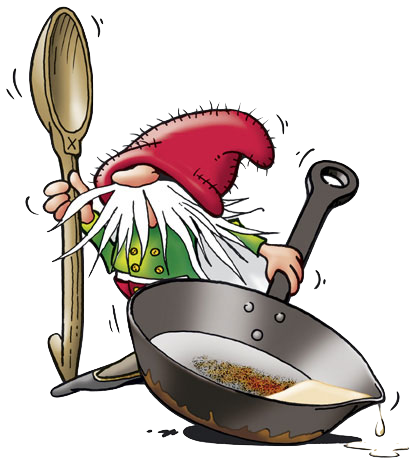
But the great irony is that the miniature warrior... that tiny Beowulf of a Yule Lad... is on a great quest to steal... uh... grease spattered frying pans.

It certainly is a weird hobby. Stúfur has a harder journey than the other Yule Lads. His little legs have to work harder. He often is covered by snow as he journeys to the villages and has to use a telescope poked up through the snow so he knows where is going. And he has to beat up all the dragons and Vikings he meets along the way.

And the reason Stúfur beats the odds and steals those frying pans? Well, it is because he likes to lick off the grease and drippings that are left in the frying pan. It's rather humbling when you think about it... all that tough journeying and fighting to lick off a bit of bacon fat?

There is a parable in there for sure. But it's kind of a weird one. Anyway, if you fry up anything on Dec. 14 and through Dec. 27, just don't be surprised if your frying pan disappears moments after you set it aside. It's Stúfur style recycling!

Icelandic

Stúfur hét sá þriðji,
stubburinn sá.
Hann krækti sér í pönnu,
þegar kostur var á.

Hann hljóp með hana í
burtuog hirti agnirnar,
sem stundum brunnu fastar
við barminn hér og þar.

English

Itty Bitty was the third,
That short fellow.
He borrowed a pan,
When he could do so.

He ran away with it
And picked and ate the food-bits
That sometimes stick
To a pan here and there.

Berglind, Iceland24h.blogspot.com
December 2015

Giljagaur - Icelandic Yule Lads (December 13th)

Giljagaur arrives on Dec 13. His name means "Gully Oaf." He is usually portrayed with gray hair and wearing very plain colored clothes. As his name implies, he hides in the gullies and ditches and canyons near farmsteads. Then, after the cows have been milked, he sneaks into the barn and skims the rich cream from the top of the milk buckets. He hides again and, after morning milking, sneaks back for another creamy snack.

Sometimes his job is very easy to do, especially if you have young dairymaids and handsome warriors and lots of Viking hormones on hand. Giljagaur waits till the flirting gets started, the young people get distracted, and then he runs in and steals the cream.
Giljagaur - Icelandic Yule Lads (December 13th)
He also has a fondness for cows, too, and he speaks bovinese, so he and Búkolla here are swapping some stories. Icelandic cows are a special breed, unchanged since the Vikings brought them to the island. They are quite small and can live in mountainous areas, but they are sweet natured and provide a lot of good quality milk. They also come in an amazing variety of colors, and some even have brindle stripes!

Vikings rarely drank milk. They used it for baking and to make other products that kept well in storage, like cheese, sour milk (tastes like buttermilk) and a thick low-fat curd called "skyr." They also used the whey from cheesemaking as a way to preserve meat products, a tradition that continues to this day in Iceland. The resulting "pickled" meats were an unpleasant grey in color, but they kept well, tasted quite all right, and were nutritious. The whey itself actually has a taste similar to white wine.

The people of Berk managed to always keep a few cows on hand, but they had to hide them in caves and canyons and then make a difficult trek twice a day to milk them. Now, the dragons know to leave cows alone (a few dragons even like cheese as a treat), so once again Giljagaur can raid the stables.

So, keep your fresh cream locked away and make sure that the dairy personnel who work between Dec 13 and 26 are not the kind to be easily impressed by a well turned out pair of biceps.

Icelandic

Giljagaur var annar,
með gráa hausinn sinn.
- Hann skreið ofan úr gili
og skaust í fjósið inn.

Hann faldi sig í básunum
og froðunni stal,
meðan fjósakonan átti
við fjósamanninn tal.

English

Gully Imp was the second,
With his grey old head.
He crept down from the mountain,
and into the cow shed.

He hid in the stables
- And stole the froth,
While the milkmaid chatted
Up the stable boy.

Berglind, Iceland24h.blogspot.com
December 2015

Wednesday, November 11, 2015

A journey into the Heart of Iceland’s music festivals

Every year Iceland hosts dozens of music festivals, both in summer and in winter. Below is a concise list of music festivals in Iceland, showing you exactly where to go to discover the gems of International and Icelandic music.


Sónar Reykjavík offers you the best concerts/DJs in electronic music combined with audiovisual productions from Iceland, and from around the globe. For 3 nights, on 5 stages and with over 70 artists and bands, the prestigious Harpa Venue transforms into a massive nightclub where creative expression through dance is a certainty.          

Reykjavík Blues Festival takes place at the end of March. The festival opens with blues concerts in downtown Reykjavík on the first day, which is then followed by blues festivities and concerts at the Hilton Nordica Hotel.


Aldrei fór ég suður (I never went south), was set up in  2004 by Mugison, an Icelandic musician.  The festival takes place in Isafjörður, in the Westfjords,  where Mugison lives, and welcomes the best of Icelandic music. One year Sigur Rós showed up in cowboy hats and performed hillbilly versions of all their old tunes. All concerts are free of charge!

Secret Solstice festival first took place in June 2014. With Massive Attack performing last year, and Wu-Tang Clan this year 2015, the festival immediately became a major popular event. The Secret Solstice is situated in the Laugardalur valley in Reykjavík; it’s been nicknamed Festival of the Midnight Sun, because it takes place over the summer solstice weekend... 72 hours of music,  and the sun that doesn’t set... quite a program!


Við Djúpið also happens around the time of the summer solstice,  in Isafjörður in the Westfjords. This festival is organised in co-operation with the Iceland Academy of Arts. Traditional music and classical music are on the program, and the festival offers lessons and workshops by renowned musicians.

Eistnaflug is a metal music festival running since 2005 at Neskaupstaður and hosts the most popular unsigned metal bands (most of them Icelandic).With more than thirty groups on the agenda, this festival doubles the population of this small town in the Eastfjords.

Siglufjörður (folk music festival) begins on the first Wednesday of July and offers concerts, conferences and workshops to promote traditional Icelandic music and Icelandic instruments. Steindór Andersen and Sigur Rós made a noticeable appearance there in 2009.


The British festival ATP (All Tomorrow’s Parties), were invited in 2013, to the old military base of Ásbrú, close to Keflavík, and return every year for a few days at the beginning of July. Good quality International bands (Belle & Sebastian, Public Enemy, Portishead, Mogwai, Nick Cave & The Bad Seeds) performed at ATP,  as well as upcoming local bands. Amazing concerts, cinema, DJs and other activities have made ATP successful for three years in a row.

Iceland Airwaves is without a doubt the most well-known and most popular festival in Iceland. With more than 100 groups and musicians on the program, this festival attracts travellers from all over the world. For five days in November,  downtown Reykjavík vibrates to the sound waves of the festival and music can be heard everywhere!


Joanne, Iceland24h.blogspot.com
November 2015

Friday, October 2, 2015

Top 20 Things to Do in Lake Mývatn - Trip to Mývatn

Mývatn offers a unique natural environment. With large contrasts and small distances you can experience the most and the best that Iceland has to offer. Large open spaces with roads and walkways lead travellers to interesting locations, were volcanic eruptions have played a crucial role in the formation of the landscape.

Top 20 Things to Do in Lake Mývatn - Trip to Mývatn

Whether the plan is to enjoy the landscape, examine unique natural phenomena or take a closer look at the plant and bird life, Mývatn has it all. Furthermore the area offers a variety of services in accommodation, food and entertainment, based on years of experience and knowledge. A large number of travellers visit Mývatn in the summer, but many believe the lake and its surroundings to be no less impressive in the wintertime.

The lake was created by a large basaltic lava eruption 2300 years ago, and the surrounding landscape is dominated by volcanic landforms, including lava pillars and rootless vents (pseudocraters). The effluent river Laxá is known for its rich fishing for Brown Trout and Atlantic Salmon. The name of the lake (Icelandic mý ("midge") and vatn ("lake"); the lake of midges) comes from the huge numbers of flies (midges) to be found there in the summer.

Top 20 Things to Do in Lake Mývatn - Trip to Mývatn

Must do

-Drive or cycle around Lake Mývatn, one of the largest lakes in Iceland, 37km2. Varied bird life, unique nature with landscape being formed by intense volcanic activity. Possible to rent a bike.

-Climb up to the crater Hverfjall. Walk the whole circle around the rim of this beautiful tephra ring which is one of the largest in the world.

Top 20 Things to Do in Lake Mývatn - Trip to Mývatn

-Taste the traditional “Hverabrauð” with smoked trout. This is dark bread that the locals bake underground in the geothermal heat. Available at most cafe’s and restaurants.

-Take a relaxing bath in the Mývatn Naturebaths and don ́t forget to try out the natural steam bath as well, but steam bathing is an old tradition in the area. The spa is open all year round. Spoil yourself!

Summertime (1. June - 31. August): 09:00 – 24:00
Entry no later than 23:30.
Wintertime (1. September - 31. May):  12:00 – 22:00
Entry no later than 21:30.

More information: http://www.jardbodin.is/en/

Top 20 Things to Do in Lake Mývatn - Trip to Mývatn

-Go birdwatching around the lake and visit Sigurgeir ́s Bird Museum for an interesting showcase and great information on icelandic birds and their habits.

-Take a sightseeing flight from the local airport in Reykjahlíð village. It sure looks different from above, great views over the region.

-Rent a bike and cycle to the Höfði Peninsula. Great view to the lake, rich birdlife, trees and vegetation.There is a hiking path around the peninsula and great view from the top of the hill.

-Get lost in Dimmuborgir lava formations. Great place for hiking, with marked trails that take you around these beautiful natural formations. Beware of the trolls and elves around.

Top 20 Things to Do in Lake Mývatn - Trip to Mývatn

The Dimmuborgir area consist of a massive, collapsed lava tube formed by a lava lake flowing in from a large eruption in the Þrengslaborgir and Lúdentsborgir crater row to the East, about 2300 years ago.

At Dimmuborgir, the lava pooled over a small lake. As the lava flowed across the wet sod, the water of the marsh started to boil, the vapour rising through the lava forming lava pillars from drainpipe size up to several meters in diameter. As the lava continued flowing towards lower ground in the Mývatn area, the top crust collapsed, but the hollow pillars of solidified lava remained. The lava lake must have been at least 10 meters deep, as estimated by the tallest structures still standing.

The lava flow surface remains partly intact around the Dimmuborgir area, so that the Dimmuborgir itself sits below the surrounding surface area. The area is characterised by large hollow cell- or chamber-like structures formed around bubbles of vapour, and some dramatically standing lava pillars. Several of the chambers and pillar bases are large enough to house humans, giving rise to the term "castles" (borgir).

-Explore the pseudocraters at Skútustaðir, interesting crater formations formed in steam explosions when molten lava flowed over wetland.

-Visit the geothermal area Hverir by Námaskarð. High temperature area where you find steaming fumaroles and bubbling mudpools. Watch out it ́s boiling hot!

Top 20 Things to Do in Lake Mývatn - Trip to Mývatn

-Get to know the icelandic horse and it ́s good temper by taking a riding tour through the beautiful district of Lake Myvatn. No riding experience needed.

-Visit the Krafla area, one of Iceland ́s most active volcanic area. Marked hiking trail to Leirhnjúkur, where the lava is still steaming hot since last eruption in 1984.

Top 20 Things to Do in Lake Mývatn - Trip to Mývatn

-Hike the marked trail to the top of Mt. Vindbelgur. Amazing view over the lake, pseudocraters and the Mývatn region from the top.

-Take a day tour to the Askja Caldera and the nature reserve Herðubreiðarlindir. Scenes of unforgettable Icelandic nature and geology. Only accessible by 4x4.

Top 20 Things to Do in Lake Mývatn - Trip to Mývatn

-Experience the Aurora Borealis - Northern lights, during winter time. You can also go on a snowmobile tour or nordic skiing tour on the frozen Lake Mývatn.

-Meet the Icelandic Yule Lads in Dimmuborgir during the month of December. These are the 13 “santa clauses” of Iceland, funny and interesting fellows.

-Dettifoss is a waterfall in Vatnajökull National Park in Northeast Iceland, and is reputed to be the most powerful waterfall in Europe. It is situated on the Jökulsá á Fjöllum river, which flows from the Vatnajökull glacier and collects water from a large area in Northeast Iceland. The falls are 100 metres (330 ft) wide and have a drop of 45 metres (150 ft) down to the Jökulsárgljúfur canyon. It is the largest waterfall in Europe in terms of volume discharge, having an average water flow of 193 m3/s.

Top 20 Things to Do in Lake Mývatn - Trip to Mývatn

-Buy a traditional Icelandic woolen sweater, as a souvenir to take home. Knitted by the local ladies.

-Participate in the Myvatn Marathon held in May every year. One of the best views one can get while running a marathon. The track goes around the lake.

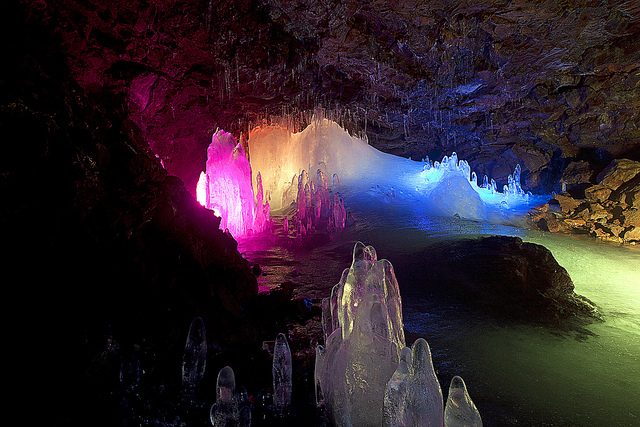
-Explore the beautiful cave Lofthellir, a weird world of ice and darkness. Amazing ice sculptures inside the lava cave. Only accessible on a guided tour and 4x4.

Top 20 Things to Do in Lake Mývatn - Trip to Mývatn

LINKS

Mývatn panoramic virtual tour
http://www.icelandvirtualtour.com/myvatn-skutustadir-pseudocraters.html

HIKING FROM DETTIFOSS TO MÝVATN

Many hikers go from Dettifoss to Mývatn (Krafla). This route is not marked and not within Vatnajökull National Park. However, for the many hikers that go this route, here are some points to consider.
Distances:


Dettifoss – Lake Eilífsvötn (west side) 12-14 km 

Eilífsvötn - Krafla ~12 km 

Krafla - Reykjahlíð ~13 km


Navigation  

The route from Dettifoss to Krafla is not marked and there is no clear path to follow. The hike from Krafla to Reykjahlíð is a marked trail and starts at the car park at Leirhnjúkur. Therefore, during most of the Dettifoss-Mývatn route, hikers need to have good navigation skills. 

Hikers need to know how to use a GPS instrument and/or a compass and have a good understanding of maps. There are hills and mountains in the landscape that are helpful for navigation, eg. the mountain Eilífur, which can be easily seen from nearby Dettifoss on a clear day. However, on a foggy day the forms of the landscape cannot be seen and it is easy to lose direction. Those who do not have good navigational skills are recommended not to go this route. 

Route landscape  

There are no special dangers on the route. The route from Dettifoss to Lake Eilífsvötn goes over a gravel plain, moor and tussocks and is quite easy to pass. From Lake Eilífsvötn, the conditions of the hiking route depends on which direction is chosen. The more west hikers go the more lava and ravines they pass, where special care has to be taken. 


Top 20 Things to Do in Lake Mývatn - Trip to Mývatn

Drinking water  

Hikers need to carry all beverages for each day of the hike, as there are only three places where there is access to drinking water:  

-On the campsite at Dettifoss there is drinking water in containers. Rangers from Vatnajökull National Park fill the containers with fresh water every day. Please use this water as spaerly as possible. 
-At Lake Eilífsvötn, both on the west side and east side, are springs and brooks which are safe to drink from. 
-At the toilet house at Krafla/Leirhnjúku
Berglind Rós, Iceland24h.blogspot.com
© 2014 Iceland24h.blogspot.com, December 2014

Contact Form

Name

Email *

Message *