Thursday, June 25, 2015

Kjölur highland route interior F35 in Iceland (Gullfoss to Varmahlíð - Blönduós)

Route F35 through the middle of Iceland, usually called the Kjölur route, is unique among Iceland’s Highland roads in being the only one you can traverse in an ordinary two-wheel drive car. Running between Gullfoss in the south and the Ringroad near Varmahlíð, at 200 km. long Kjölur is the shorter of the two inland routes across Iceland.


Of course two-wheel drive hire cars are not allowed on F-roads at all for insurance reasons; so that’s out of the question. And if you love and care for your own little Yaris, Avensis or Passat then it’s probably best to leave it at home. If, however, you are in someone else’s car, then have a blast!


Despite its convenient ‘unique selling point’ there is little doubt that you will be more comfortable and less prone to mishaps if you stick to a decent 4×4 vehicle along the Kjölur route. That way, things like mud and washboard gravel won’t be able to ruin your day.

As with all Highland roads in Iceland, Kjölur is only accessible in the summer, opening usually in late May or early June. You can check road conditions before you leave on the roads administration website. You should also study SafeTravel.is carefully. We also recommend you to read our article about driving in Iceland.


There are many reasons for visiting the Highlands; most of them involving the desire to ‘get away from it all’ (whatever all of it may be) and to see some of the only wilderness in Europe.


There really isn’t a lot up there – and that’s of course the biggest attraction!


The Kjölur route starts conveniently right by Gullfoss and winds its way up between the Langjökull and Hofsjökull glaciers and right past Hveravellir; a bubbling, glooping, churning geothermal area you’d be mad not to stop off at especially to take a refreshing dip in the hot spring. There is accommodation here if you want to stay the night, and plenty to explore on foot.


Before that, you will pass Lake Hvitarvatn and its surroundings. Langjokull glacier, Thorisjokull glacier, Eiriksjokull glacier, Hrutfell mountain, Hagavatn lake and Hvitarvatn lake.

Langjokull glacier

The glacier is roughly parallel to the direction of the country's active volcanic zone (see volcanism in Iceland): north-east to south-west. It is about 50 km long and 15 to 20 km wide, and has a slightly narrower point roughly between the lake Hvitarvatn on the Kjolur mountain road to the east and the Thristapajokull glacier to the west, near another smaller glacier, Eiriksjokull glacier, which is not quite connected to Langjokull glacier.


It is the nearest large glacier to Reykjavik. The area of the glacier includes some mountains, e.g. Jarlhettur ("The earl´s hat") on the east side of Langjokull glacier, a palagonitic mountain range, which originated in a fissure eruption under a glacier during Ice Age. The mountain Skridufell (1235 m) is situated on the east, above lake Hvitarvatn. Other mountains on the eastern side of Langjokull glacier are Fjallkirkja (1177 m), Thursaborg (1290 m) and Peturshorn (1370 m). A little to the east of Fjallkirkja is the hut of the Icelandic Glacier Research Society (Joklarannsóknarfelag), which includes scientists as well as interested amateurs.


Lake Hvitarvatn

Hvitarvatn (also known as Hvitarlon) is a lake in the Highlands of Iceland and the source of glacial river Hvita (e. White river), Hvitarvatn means 'White river lake'. It is located 45 km northeast of Gullfoss waterfall. It's surface is about 30 km² and it's greatest depth is 84 m. It is a magnificent experience to sail on the lake and the view is amazing.


Langjokull glacier is next to the lake and it goes all the way into the lake. The scenery is very beautiful. This is a place you have to visit. You can take a day tour and see the glacier and its magnificent surroundings.


You can also take a hike on the glacier and the view from there is fantastic.

http://www.glacierlake.is
Teléfono +354 8221006
e-mail info@glaciarlake.is


Hveravellir is a unique nature reserve situated on the Kjolur route in the middle of the west highlands between the glaciers Langjökull and Hofsjökull.


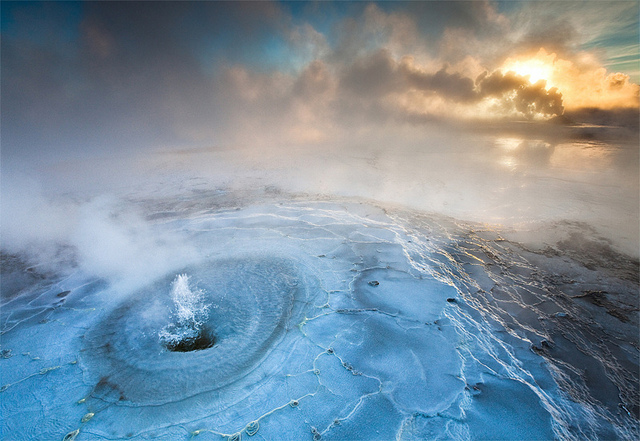
Hveravellir is one of the most beautiful geothermal areas in the world with smoking fumarolees and beautifully shaped with sky blue, boiling water. It is a special experience to have a look around, whether it is in the summer or winter.


As it continues north (assuming you choose to drive south to north…it’s not a one way street), the Kjölur route wends its way through the mini ‘lake district’ around the Blanda river and the Blöndulón reservoir before emerging onto the Route 1 highway (after a short drive along Route 731) in the town of Blönduós, North Iceland.


Blöndulón is one of Iceland’s biggest lakes and was created from scratch as recently as 1984 and not finished until 1991. It is a reservoir for a hydro electric power station and is fed by Blanda one of Iceland’s longest and biggest rivers and one of the best places to catch salmon in all of Iceland, which is already famous for its salmon. This remains true to this day, despite the fact that the dam has stopped salmon spawning as far upstream as they once did.


Anyway, this was not an article about salmon; it was about exploring the Icelandic Highlands. So get out there and do just that…but be careful!

Activities in Hveravellir: 

There are a number of other walking routes in the vicinity, for example to Rjupnafell, Thjofadalir, Jökulkrok and up to or on to the glacier Langjökull. Longer routes, for example to Hvitarvatn in the south as well as over the old route over Kjalhraun or along the borders of the glacier Langjökull, are also available. A fascinating route is also along the northern part of Langjökull and through Hallmundarhraun to Husafell. A further nice route leads around Hrutfell from where one can enjoy an extraordinary view over the area. There are an almost endless number of routes to choose from and everyone is sure to find something to suit their taste.


There is a horse rental at Hveravellir. A number of horse riding trails can be found in the surrounding area. One can choose between tours lasting a few hours, a whole day or even a number of days. The Icelandic horse is used to this rough terrain as it was the only mode of transportation over this route when the first settlers arrived in the country.


Geothermal pool at Hveravellir:

The geothermal pool at Hveravellir is unique. Both hot and cold water flows to the pool, which makes it easy to regulate the temperature of the water in the pool. Over 20 people can comfortably bathe in the pool at the same time. The pool and its entire surroundings are magnificent, offering a beautiful view of the geothermal area, Kjalhraun lava field and Langjökull. There is nothing that can compare to a dip into the pool after a days hike in the highlands.


3 Days - Hiking Route 

The hiking distance is 42 - 44 km. At the starting or finishing point, Hvitarnes, is the oldest hut (1930) of the Icelandic Tourist Association for 30 persons.  


Day 1. The first leg from Hvitarnes is about 12 km long and ends at the Thverbrekknamuli hut with an ascent of 100 m.  

The Hvitarnes hut was the first to be built by the Iceland Touring Association in 1930.  It is located 425 metres above mean sea level.  It comprises the ground floor with two sleeping rooms, a kitchen and the entrance, the attic with mattresses on the floor and a small room.  In the kitchen is a gas-stove and a log-stove, but no utensils.  

A WC is in a separate house and the warden lives in another small house.  The view from the hut is breathtaking, and this hut is the starting or end spot of hikes on the ancient Kjolur Route.

The Thverbrekknamuli hut is situated southeast of Mt Hrutfell, near river Fulakvisl.  It is near the middle of the hiking trail on the ancient Kjolur Route.  

The hut was built in 1980 and accommodates 20 people.  The house is heated with gas and an oil-stove.  There are no utensils in the house and visitors have to take garbage with them. A WC is near the hut and a latrine for winter travellers a bit further away. The fifth bridge across river Fulakvisl was built in 2005.  The others have either been swept away by floods or not withstood the weight of the winter snow.


Day 2. The second leg ends at the hut in Thjofadalir after a 14-15 km hike with an ascent of 100 m. 

The small hut in valleys Thjofadalir was built in 1939 to accommodate 12 people.  It is located at the foot of Mt Raudkollur and the hillock Throskuldur is nearby. It is on the ancient trail across the Kjolur highlands between the northern and southern parts of the country. It has a tiny entrance, a ground floor and an attic above half of the ground floor. There are no utensils in the house.  

The latrine is a short distance away from the house. Visitors have to take all garbage with them. The environment offers short and pleasant hikes, i.e. Mt Hrutfell, Fagrahlid and jokulkrokur at the edge of glacier Langjokull. Mt Raudkollur and Oddnyjarhnjukur are also worthy goals.


Day 3. The third leg ends at the hut in Hveravellir after a hike of 12 km and an ascent of still another 100 m.  There are several booklets available on this hiking route. For further information on the route the Travel Guide is at hand.

Iceland24h.blogspot.com, Johanna
© 2015 June 2015

Thursday, June 11, 2015

Camping in Iceland - Campsites in Iceland

Camping in Iceland is not like camping in your home country. Therefore, today we are providing you with Iceland camping tips so you can prepare.

Camping in Iceland - Campsites in Iceland

What You Need

Money – Iceland does have credit card machines at locations that sell items. However, you still need to make sure that you have some cash on hand to make sure that you are prepared in the event that an emergency arises.

Camping in Iceland - Campsites in Iceland

Alcohol – The government is in charge of alcohol distribution in Iceland. This means that you are not going to find beer anywhere. However, there are some state alcohol stores yet they are only in major towns and they can be hard to find since advertising alcohol is illegal.

Therefore, before coming camping you need to make sure that you stock up.

Camping in Iceland - Campsites in Iceland

Food – Make sure that you have a cooler. If you plan to rent a campervan, they will probably come equipped with one. Having a cooler is going to save you money because you can fill it with the items that you need.

It is suggested that you purchase local food during your journey so you can have fresh food and support the smaller towns. If you get a craving for some junk food, you can always stop at one of the many gas stations that you will pass.

Staying Clean During Your Iceland Camping Trip

Bathing – When traveling in Iceland you can camp wherever you desire. This is nice because you are able to experience nature yet after a few days of doing so you are not going to smell so pleasant. The good news is Iceland has tons of geothermal energy, which enables them to pump boiling water out of the earth at a fair price.

Camping in Iceland - Campsites in Iceland

Iceland is also full of swimming pools/hot tubs. It is suggested that you go swimming daily when camping in Iceland.

Camping in Iceland - Campsites in Iceland

Doing Laundry – When at the campsites you have access to washing machines that can be rented for an affordable price.

Camping in Iceland - Campsites in Iceland

Closing Thoughts

If you are planning a camping trip and need to rent a motorhome/campervan in Iceland or have any more questions, read our article, which includes price comparisons for reputable companies.

Enjoy your camping trip in Iceland!

Mike, Iceland24h.blogspot.com
© 2015 Iceland24h.blogspot.com

Sunday, June 7, 2015

Where to stay during a trip to Iceland

There are many types of accommodations in Iceland: campgrounds, guesthouses, bed and breakfasts, huts, rental cottages, hotels... Reservations are not necessary in winter, but during high season (June to August), we strongly recommend booking in advance because most places are full. It is a good idea to bring along a sleeping bag because sheets cost extra in hostels, and some guesthouses and cabins for rent. These prices are given as a guideline and refer to high season rates, so do not be surprised if they seem outrageous. In winter, lodgings are available for half that price, especially outside the capital.

Where to stay during a trip to Iceland

For budget accommodations during the summer season (June to August), or off-season if you are brave and well-equipped, camping is your best option. No reservations are required. There are about 200 campgrounds spread throughout Iceland; they are listed online at http://tjalda.is. Rates range from 1 000 to 1 500 ISK per night, per person.

Where to stay during a trip to Iceland

The Ferðafélag Íslands Association manages the huts stationed along the hiking trails. The list of huts is available on their website, http://www.fi.is. Per night, per person rates fall between 5 000 and 7 000 ISK. The huts have a small housing capacity and must be reserved well in advance.

Where to stay during a trip to Iceland

Hostels are an affordable option, whether travelling alone or in a group. Rates start at around 4 500 ISK for a dormitory, 7 500 ISK for a single room and 20 000 ISK for a four-person room. Bathrooms and kitchens are shared. Breakfast is not included. http://www.hostel.is

Guesthouses or bed and breakfasts are everywhere in Iceland, and offer private rooms with different options or extras: private bathroom, breakfast, find the combination that is right for you. Rates are generally between 120 and 180 euros. The Iceland Tourism Office’s website lists them by region here: http://www.visiticeland.com. We recommend this little guesthouse in North Iceland: http://www.elfguesthouse.com

Where to stay during a trip to Iceland

Icelandic Farm Holidays offers more than 170 lodgings, of all types and at any price, in the Icelandic countryside. More information is available on their website, http://www.farmholidays.is.

Where to stay during a trip to Iceland

Airbnb is a new platform for staying in Icelandic houses or apartments during your trip. You can rent one room in a house or the entire home. Prices vary significantly depending on lodging type, date and city. https://www.airbnb.com

Hotels are plentiful in Iceland. Except for the Edda hotel chain, which are schools converted to hotels for the summer, they are expensive. If you can find a double room in a Hotel Edda for 100 euros, then the same room in a traditional hotel will cost double. http://www.hoteledda.is/en

Where to stay during a trip to Iceland

If you are travelling as a family or in a group, you can reserve Icelandic summer cottages on http://bungalo.is. Most cottages have a two-night minimum stay and must be clean upon departure.

Where to stay during a trip to Iceland

Berglind Rós
Iceland24h.blogspot.com, June 2015

Friday, June 5, 2015

Icelandic horses: About the Icelandic Horse

When traveling around Iceland, you will probably notice the Icelandic horse, wherever you go. The small horse might look wild, but it is known for being very friendly, it is also believed to be one of purest horse breeds in the world. So what is Icelandic horse and why is he so unique? Here will be answers for those questions.


This small horse (average 135cm) came to Iceland when first viking settlers sailed to Iceland around year 800. Even though it is not a big horse, it is very strong, can carry a full-grown man and has adapted to Icelandic weather conditions very well. Most of the time horses spend outside, and during the winter time they grow very thick coat to protect themselves from the cold and strong winds.


The Icelandic horse is enormously muscular, and with very dense bones, often with a heavy head and compact body.  This breed is possessed of great agility and is also very sure-footed.

Icelanders are very proud of their horse, and it is not recommended to talk bad about their horses in front of them. Even they are in size of ponies, they are not called Icelandic pony.


The Icelandic horse is the only horse breed in Iceland. Natives are doing everything they can to protect their breed. That´s why all horse import in Iceland is strongly forbidden, no exceptions. Once the horse leaves Iceland, it never returns back. That way Icelanders can make sure their breed is pure and also no diseases come to the country.


Because Iceland is geographically isolated, with help of import ban, only very few horse diseases are known here. Which makes difficult for horses that leave this country, as they are are not immune for sicknesses that are popular in other countries.


Back in the days Icelandic horse was very important part of Icelandic people. Before cars came, it was the only way of transportation. Iceland is also one of not so many contries that eat horse meat (also still today). A popular entertainment among vikings was also stallion fights. Nowadays Icelandic horse is bred for leisure, sport and also meat.


The icelandic horse has 5 gaits.  The gaits are walk, trot and canter/gallop, like in other horses, but also the super smooth tolt and many of the Icelandics also master the 5th gait, the thrilling and fun flying pace.    

The tolt is a smooth four beat gait (similar to the running walk or rack)  The rider sits virtually bounce free at speeds up to 20 mph.  You can carry a glass full of beer or your favorite drink while riding the tolt, without fear of spilling it.  The tolt is a natural gait, and you often see foals and grown horses tolting in the pasture.


It is very popular among tourists to explore Iceland on horseback, there are many horse rentals all over Iceland that offer shorter and longer horse riding tours. If you have never had experience with horses, Iceland is a place to give it a try. Icelandic horse is a gaited horse, which means besides the „regular“ gaits that all horses have – walk, trot and canter, Icelandic horse has two „extra“ – tölt: very comfortable gait, often said to be faster version of walk and flying pace: a very fast gait, where the horse shows off all his power.


If you are interested in trying to ride and Icelandic horse, contact Icelandic Excursions (info@landmannalaugartours.com), and they will help you to find right riding tours that suits you.

Peter, Iceland24h.blogspot.com
June 2015

Tuesday, May 26, 2015

Green Driving Tips in Iceland

You CAN make a difference! 

As stated in our environmental platform, one of our objectives is to reduce emissions from the company´s car fleet. With regular maintaining and service, we keep our vehicles operating at peak efficiency. By following the „green“ driving tips below, you can improve your fuel economy and help us to reduce the negative environmental influence and create a greener future.

Plan routes and consolidate your trips: 

Whether going for a longer vacation or a quick trip, plan out your routes in advance to avoid heavy traffic periods and areas. If rush hour or road construction leads to traffic jams and stop-and-go driving, sometimes, the longer route can consume less fuel than a shorter one. So plan your routes to enable you to bypass congested routes and lead to fewer start-ups and less stop-and-go driving. Try to combine several short trips into one to save fuel and cut down on pollution. Warmed-up engines produce lower emissions.


Lighten your load and reduce drag: 

The more weight a car carries, the lower its fuel economy will be. Only pack what you need for vacations (including emergency items), and remove items that are not needed. Remove unneeded roof boxes, trailers and other items from your vehicle that cause wind resistance. These simple steps can cut significant weight and reduce drag, enabling your car to use less fuel.

Avoid quick starts, reduce your speed and keep the RPMs down: 

A smooth, steady speed improves your fuel economy, saves gasoline and reduces wear and tear on the engine, tires, transmission and brakes. As speed increases, so does drag. So, driving at higher speeds will reduce your fuel economy. Avoid quick starts. Putting the pedal to the metal when the stoplight turns green, increases your vehicle’s RPM level and lowers your fuel efficiency. Staying at or a bit below the speed limit and watching your RPMs can have a big impact on the environment and can lower your fuel cost. For every 15 km per hour you reduce speed, you can improve your fuel economy by 10 – 15%.


Think ahead in traffic: 

Try to anticipate stops and let your vehicle coast down as much as possible. Avoid the increased pollution, wasted gas and wear on your brakes created by accelerating hard and braking hard. Be smart as you navigate your way through traffic. Create space from the car in front of you and look ahead for any potential.

Keep a recommended air pressure in your tires: 

Maintaining recommended tire pressure can improve fuel economy as much as 6 percent. Over time, tires lose air pressure and as the air pressure decreases, rolling resistance increases and that makes your vehicle less fuel efficient. Recommended air pressure for your tires is shown in your vehicle’s owner’s manual.

Peter
Iceland24h.blogspot.com
May 2015

Thursday, May 21, 2015

How to get from Keflavík International Airport to Reykjavík

Keflavík International Airport to/from Reykjavík:

Distance: 50 km
Methods of transport: Rental Car, Bus & Taxi

From Keflavík to Reykjavík

Going by Rental Car

This is the ideal option if you are looking for a hassle free journey and if public transport isn't your thing. For a very small fee, many of the well-known car rental companies in Iceland will provide a direct pick-up service from the airport. It's worth considering, as even if you're travelling with someone else, it's still cheaper than a bus ticket.

What better way to enjoy your first glimpses of Iceland than zipping along the country side with your own set of wheels. Also, it isn’t a difficult rout, directions are available at any time on map on ja.is.

From Keflavík to Reykjavík

Getting from Keflavík - Airport By Bus

There are two main air-link services to choose from: Flybus and Airport Express. Each providing effectively similar services, at a similar price, but with their own respective benefits:

Flybus:

- Provides pick-up for all flights. 
- 500 ISK charge per person for drop-off at hotel or guesthouse. 
- Free Wifi on all buses.

Airport Express

- Bookings must be placed in advance to guarantee a seat.
- Drop-off at most hotels and guesthouses in Reykjavík at no extra cost. 
- Wifi not provided.   

From Keflavík to Reykjavík
  
Getting from Keflavík - Airport By Taxi

Here in Reykjavík, the Taxi services are reliable, trustworthy, frequent and run on a meter basis. The usual price is around 15.000 ISK if you are traveling with up to 4 people. 

City Taxi is a small and reliable company, who will get you to where you want to go in a timely and comfortable manner. You'll be in good hands. (There is also no problem if you or a member of your group requires wheelchair access)!

You can usually get a cab without problem directly outside the arrivals area after you land; or, for your own peace of mind, have one booked waiting for you in advance. And now you know who to call!    

From Keflavík to Reykjavík

Alternative methods

If you are penniless and a bit adventurous you could try one of the following methods. Hitchhiking is a fairly common practice in Iceland and it's usually quite safe. Just always be sure to be safe and responsible if you are going to hitch. The certainty that you'll get a lift along this route isn't 100%, so you may have to do a little trekking before you get anywhere with it.

The second option, apart from walking (which let's face it, you'd probably struggle with even if you’d enjoy the scenery) is: keeping a look out for friendly, nice people who may have their car at the airport and would be willing to drop you off somewhere along their journey. There are lots of them in Iceland, don't worry. Strike up conversation on the flight or ask someone in the arrivals lounge if they're heading to Reykjavik too. If you don't ask you don't get – and what's the harm in trying, eh? 

How to get from Keflavík International Airport to Reykjavík
  
Directions

Finding your way to and from Reykjavik or Keflavik Airport isn't too much of a challenge, but should you need directions check out map on ja.is.

Safe travels!

Jóhanna, Iceland24h.blogspot.com
May 2015

Friday, May 15, 2015

The Westfjords - Travel ideas and how to spend 3, 5 or 7 days - Iceland24h.blogspot.com

The Westfjords region has sometimes been dubbed “the most famous unknown place in Iceland”. Well, throw in the prestigious “European Destination of Excellence” awards and add to that the fact that the Lonely Planet travel guide put the area on its top 10 list of regions in the world to visit in 2011, and you will see that the Westfjords are becoming increasingly famous – or perhaps less unknown.  

Westfjords - Iceland

Lonely Planet, the respected travel guide publisher, placed the Westfjords in its top 10 regions of the world to visit in 2011, saying that the “oddly shaped” peninsula is “as isolated as it is spectacular”. Luckily, “isolated” does not mean inaccessible. With only 7400 inhabitants in the area, each person has around 1,2 km2 of personal space, so there is ample room for any visitors as well.

Although the locals are great, it is, by and large, the nature that attracts visitors. For understandable reasons as well: it is untouched and almost uninhabited. The cliffs and valleys are packed with birds, the uninhabited fjords offer a moment of silence and tranquillity, and the Arctic fox proudly roams the mountains and inlets. The waterfalls are high and the streams pure. The distances are long and the fjords are deep. And then there are places where there are no roads at all.
 
Westfjords - Iceland

The Westfjords are a great place to watch the Northern Lights (Aurora Borealis) during the winter and equally fantastic to experience the midnight sun during the summer. Visiting the Westfjords is surely a different experience. It is Iceland, but yet a different Iceland altogether.

Watertrail

The Westfjords has many hidden gems with plenty of natural or semi- man made pools in remote natural locations. The abundance of hot water and rich history of bathing have created a unique outdoor bathing culture in close relation with nature. Our natural springs are based on geothermal water that flows directly and constantly from the ground. Many visitors stay in the pool around midnight during winter and watch the northern light that are one of a kind, which is an experience people never forget. During the summers we have 24 hours of daylight and our visitors enjoy the romantic of the midnight sun. The Watertrail promotes self-sufficient and independent tourism that respects the natural environment.

See more at www.watertrail.is

Westfjords - Iceland

Food trail

The Westfjords Foodtrail is based on strong cultural background as well as embracing modern food tradition with a local twist. The aim is to promote and increase the visibility of Westfjords‘ top quality food. Innovation is encouraged and special emphasis is put on product development, motivating new techniques in the production, processing and cooking practices of Westfjords local ingredient and related services. Restaurants members in Westfjords Foodtrail ambitiously present each area‘s food specialty and food producers are highly devoted in producing top quality food items originated from the Westfjords. The food is specifically labeled so if you are looking for traditionally smoked products, freshest ingredients of the day or jams made of rhubarb.

See more at www.veislaadvestan.is

Attractions

From the Hornstrandir nature reserve in the norht to Latrabjarg bird cliff in the south, you can find abundance of attractions in the westfjords of Iceland.

-Dynhandi. The Westfjords’ favourite front-page model for decades, and is never short of breathtaking. The biggest and widest part of the waterfall is the one that gets all the attention and the photos, even though there are impressive, albeit smaller, waterfalls further down the river. In fact, one is formed in such a way that the brave can walk behind it, relatively dry. There is a camping place at the site with basic services.
Westfjords - Iceland

-Natural pools. Among the hidden gems of the Westfjords are the natural hot pools that can be found even in most remote places. This might sound like a cliché, but the pools are truly a well kept secret, taken for granted, or even forgotten by locals. An explanation could be that the Westfjords are not generally considered a "hot spot" in Icelandic geology, so the geothermal activity is not as visible as it is in the north or the south of the country. Therefore it is surprising to find that nowhere in Iceland are there more natural bathing pools than in the Westfjords, the reason being that the water is of perfect temperature straight from the ground.

-Bird life and good areas for birdwatching. Here we will make do with a short description of two areas, although they do by no means exhaust the opportunities for birdwatching. Other areas, such as the islands in Breidafjordur, the Reykhólar area, Onundarfjordur and Heydalur and many more, also offer wonderful opportunities for birdwatchers.

Westfjords - Iceland

Látrabjarg and vicinity: The road goes out to the lighthouse at Bjargtangar, the westernmost point of Iceland, and from there to the edge of the Látrabjarg cliff. In thesummer there are scheduled trips between Látrabjarg and the main towns of the Westfjords region.

Westfjords - Iceland

The road goes around Patreksfjordur before turning inland at Orlygshofn and over the heath above Breidavik, and along Latravik out to the end of thepoint. Orlygshofn is an important nesting area for eiders and there are a huge number of waders and sea birds in the bays. There are a large number ofwetland birds in Breidavik, and in Latravik an unusual number of ringed plovers. Snow buntings occur in large numbers on the uplands. Stretching for14 km and rising to 440 m at its highest point, Latrabjarg is the largest bird cliff in Iceland and also the largest by the North Atlantic.

It is thought that as many as a million birds of various kinds nest on the cliffs of Latrabjarg, including all the alcids that nest in Iceland, withthe exception of the little auk. In fact, at the foot of the cliffs is the largest razorbill colony in the world. In addition to the swarm ofguillemots and other alcids, there is a large number of fulmars and kittiwakes. And perhaps most exciting for the traveler, nowhere is the puffineasier to approach or more fun to watch.

-Museum of Jon Sigurdsson. Hrafnseyri in Arnarfjörður is the birthplace of national hero Jón Siguðsson. This spot has become a popular attraction for visitors, with it’s museum dedicated to Sigurðsson’s memory, a remake of his childhood home and the old Hrafnseyri curch.

Visitors from overseas receive a booklet with an introduction to Jón Sigurðsson, free of charge. Light meals (soup and bread) and refreshments are served on the location.

Opening hours: 1. June – 1. September at 10:00 –-20:00 (every day)
Curator: 456-8260 og 845-5518
Burstabær: 896-8107
hrafnseyri@hrafnseyri.is
www.hrafnseyri.is

Westfjords - Iceland

-Hornstrandir. This territory of the Arctic fox has been uninhabited since the 1950s. As isolated as it was then, it attracts the casual half-day visitors and serious gore-tex hikers alike. Its main attractions are three. First, the bird cliffs surrounding the bay of Hornvík, are a magnet of gigantic proportions. On the eastern side of the bay the cliff reaches a height of more than 500 metres, and the birds are teeming. Second, as there are no infrastructure and the tourists few in relation to the sheer size of the area, the sense of remoteness is strong. You can hike days on end without seeing a single person. The nature is pure and the tranquillity unmatched. Third, as the area is a haven for the Arctic fox (think hunting-ban and bird-packed cliffs), the chances of spotting one are high.

Westfjords - Iceland

Most tours, especially day tours, depart from Ísafjörður. Hikers wanting to go on their own can also take boats from Bolungarvík and Norðurfjörður.

-Rauðasandur. Rauðisandur, or (Red Sand), is precisely that: a beach with red sand. Endless red sand. Well, not endless, but 10 km is a lot. The magnificent hues of the sand differ with daylight and weather, and the beach is the biggest pearl in a string of coves with sand ranging in colours from white through yellow through red to black, and in coarseness from very fine to sole-hurting chips of seashells.

Westfjords - Iceland

What to do in Rauðisandur? Nothing. Absolutely nothing. There is a Café but but not much else. There’s just pure sand and unique tranquillity. You might want to step out of the car, get the camera out and start walking. Forget everything. Except maybe getting the perfect shot of the ever-changing hues of yellow, orange and red.

-I Never Went South Rock Festival. Aldrei fór ég suður is a rock festival held in the town of Isafjordur in the Westfjords of Iceland. The entrance is free of charge and all work is pro bono. It is mix of local bands and the biggest names in the Icelandic music scene.

By plane

The quickest way to get to the Westfjords is by air, the flight from Reykjavík taking roughly 40-50 minutes, depending on the destination.

Air Iceland - www.flugfelag.is
Two daily flights to Ísafjörður all year round.
Eagle Air Iceland - www.eagleair.is
Two flights per week from Reykjavik to Gjögur and six flights per week to Bíldudalur.

Westfjords - Iceland

By car

Reykjavík to Ísafjörður, 455 km, paved road:
Reykjavík - Hvalfjörður (tunnel) - Borgarnes - Brattabrekka (road 60) - Svínadalur - Arnkötludalur (road 61) - Steingrímsfjarðarheiði - Ísafjarðardjúp - Ísafjörður

Reykjavík to Þingeyri, 408 km total, 271 km of paved road:
  Reykjavík - Hvalfjörður (tunnel) - Borgarnes - Brattabrekka (road 60) - Svínadalur - Barðastrandarsýsla (road 60) - Dynjandisheiði - Hrafnseyrarheiði - Þingeyri

By bus

A public bus service runs between Reykjavík and Ísafjörður six days per week in June, July and August, along two different routes:

A- Reykjavik-Stykkisholmur-Brjanslækur (with ferry Baldur)-Isafjordur. Connection to Patreksfjordur and Latrabjarg.
B- Reykjavik-Hólmavík-Ísafjörður. Busses drive in both directions along these routes, so it is easy to combine them to make a full Westfjords Circle.

Connection to the Akureyri bus is in Hreðavatnsskáli

By boat

The car ferry Baldur operates between Stykkishólmur and Brjánslækur.

From June to August there are daily departures from Stykkishólmur. Visit www.seatours.is for more information.
Westfjords - Iceland

More information

The Official Tourist Brochure and the Official Map. Click to open PDF file.
http://www.westfjords.is/media/PDF/Westfjords_Official_2012.pdf

More information about Birds in Westfjords
http://www.nave.is/Isafjordur_fuglaskod_b..pdf

Travel Ideas

How to spend 3 days

This is a recommendation of a three-day tour around the Westfjords. It is intended as a part of a tour around Iceland, and assumes you are touring clockwise around the island in a car.

Day 1
If you stayed in Stykkishólmur, wake up early to get the ferry Baldur across the fjord. If you slept in Reykjavík, wake up a little bit earlier (however early you wake up, the sun will be up before you, plus, you beat the traffic). You are on the other side around noon, ready to drive to Látrabjarg cliffs. Stay near Látrabjarg or in Patreksfjörður/Tálknafjörður/Bíldudalur village.

Day 2
Wake up early, a long day waits. Today, drive with as many stops as possible to Ísafjörður, where you’ll stay the night. One obligatory stop is waterfall Dynjandi. Others include the maritime trail in Ísafjörður and Bolungarvík (see chapter on History).

Westfjords - Iceland 

Day 3
Wake up early (starting to discern a pattern?). Drive in and out of innumerable fjords to Hólmavík. There, visit The Museum of Sorcery and Witchcraft. From there, drive further south and continue your journey around Iceland.

How to spend 5 days

This is a recommendation of a five-day tour around the Westfjords. It is intended as a part of a tour around Iceland, and assumes you are touring clockwise around the island in a car.

Day 1
Start the day somewhere in West Iceland or even Reykjavík. Driving through region Dalir, stop at Reykhólar. Stay at or near Látrabjarg.

Day 2
In the morning, check out Látrabjarg cliffs and Rauðisandur. Now change direction and head towards Ísafjörður, stopping at least at Dynjandi waterfall. Stay in Ísafjörður.

Westfjords - Iceland 

Day 3
Today, pick from the smorgasbord of tours available in the Ísafjörður area. Tours to bird island Vigur and day tours to Hornstrandir nature reserve are the ones to check out first. Stay another night in Ísafjörður.

Day 4
Before heading south, finish up your checklist of things to do around Ísafjörður. One might check out the two important museums. Sleep in Heydalur or Reykjanes or near Hólmavík.

Day 5
In the morning, dive into centuries past when sorcery was common, and witches were burned for allegedly casting spells on their neighbours at Holmavik’s Museum of Sorcery and Witchcraft. After lunch; head down south to continue your tour around the island.

How to spend 7 days

This is a recommendation of a seven-day tour around the Westfjords. It is intended as a part of a tour around Iceland, and assumes you are touring clockwise around the island in a car. We keep the description short for each day not wanting to repeat what is said in other parts of this brochure.

Day 1
The ferry Baldur goes from Stykkishólmur in the morning with destination Brjánslækur. When the ferry stops in island Flatey, hop off but leave the car keys on board. Cars are useless in the island, so the ferry staff will park your car at Brjánslækur. You have six hours in Flatey to wander around this movie set of charming old-style houses. Stay the night in Flókalundur.

Day 2
Drive to Látrabjarg cliffs. You have enough time to walk along the edge, take it slow and enjoy. Also, check out Rauðisandur and museum Hnjótur. Stay on either side of fjord Patreksfjörður or nearby in villages Tálknafjörður and Bíldudalur.

Day 3
Counting Patreksfjörður, and the end point, Ísafjörður, today’s itinerary can include up to 6 villages (Tálknafjörður, Bíldudalur, Þingeyri, Flateyri), although visiting some of them requires a short detour from the main road. On the way, be sure to stop at Dynjandi waterfall and, if time allows, Hrafnseyri museum, reopened year 2011 to celebrate the birth of an important leader of the movement of independence, Jón Sigurðsson.

Westfjords - Iceland

Day 4
In the Ísafjörður area, wide arrays of day tours are available. Most prominently, there are tours to bird island Vigur and Hornstrandir nature reserve, but others might be more interested in kayaking, or a day of postcard writing. Stay another night in Ísafjörður.

Day 5
In the morning, go through the new tunnel to Bolungarvík and visit Ósvör museum. If the skies are clear, you might even want to venture up to Mt. Bolafjall. After lunch, drive to Heydalur and soak in the natural hot pool up the valley or go for a horseback ride.

Day 6
Today, you will be visiting the most remote settlement in Iceland. Often during the winter, the road there is closed for weeks, even months. Today, Árneshreppur has 50 inhabitants. Stay the night in or near Hólmavík.

Day 7
Once in Hólmavík, nothing compares to a healthy dose of witchcraft in the morning. The Museum of Sorcery provides a memorable insight into nifty tricks to get the much-loathed neighbour sick or lure the cutie at work into a relationship. From there, drive south and continue your journey around Iceland.

Berglind Rós
Iceland24h.blogspot.com, May 2015

Contact Form

Name

Email *

Message *